Upstate New York stretches across a vast and varied territory - from the Finger Lakes wine country and Adirondack mountain towns to the St. Lawrence River waterfront and the Capital District around Albany. Choosing a centrally located hotel here means positioning yourself within reach of historic landmarks, state parks, racetracks, and cultural institutions without relying heavily on long drives. These 15 hotels are distributed across key cities and towns, giving travelers a grounded base in whichever part of Upstate New York they're exploring.
What It's Like Staying in Upstate New York
Upstate New York operates at a completely different pace from New York City - distances between towns are real, and a car is almost always necessary. The region spans roughly 500 kilometers from the Hudson Valley to the western edge near Buffalo and Niagara, meaning "central" is relative to which corridor you're exploring. Most visitors underestimate travel times between sub-regions: what looks close on a map can easily be a 90-minute drive. The area draws outdoor enthusiasts, history travelers, racing fans, wine tourists, and ski trippers, with distinct peak seasons varying by zone - summer on the St. Lawrence, fall in the Hudson Valley, winter near Gore Mountain, and August race season in Saratoga Springs.
Crowd levels stay manageable outside peak weekends, and parking is generally free at most properties across the region, which significantly reduces the cost friction compared to downstate stays. Budget travelers and families benefit the most from staying here, while those expecting walkable urban density may find the car-dependent layout limiting.
Pros:
- Free parking is standard at nearly all Upstate hotels, eliminating a major hidden cost
- Access to nationally significant sites - Women's Rights National Historical Park, Harriet Tubman Home, Baseball Hall of Fame - all within day-trip range
- Lower base room rates compared to NYC, with similar brand-name quality at 3- and 4-star properties
Cons:
- A car is essential for nearly every itinerary - public transit between towns is limited or nonexistent
- Peak season in Saratoga Springs (August race season) inflates prices dramatically across the entire Capital District
- Upstate's geography means choosing the wrong base city can add hours of unnecessary driving to your trip
Why Choose Centrally Located Hotels in Upstate New York
A centrally located hotel in Upstate New York means being within the core of a town or city rather than on the highway fringe - the difference between walking to a historic district and driving 20 minutes just to reach a restaurant. In cities like Saratoga Springs, Hudson, and Buffalo, central positioning gives access to walkable commercial streets, dining, and cultural venues. In smaller towns like Little Falls, North Creek, or Seneca Falls, central simply means being close to the few key anchors that define the destination.
Price differences between central and highway-adjacent properties in Upstate New York are not always dramatic - often around 15% - but the experiential gap is much larger. Central hotels in Hudson or Saratoga Springs, for instance, allow guests to walk to galleries, restaurants, and historic sites without planning around a car. In contrast, highway motels outside these towns require a vehicle for every single outing. Room sizes at central Upstate hotels tend to be larger than their urban counterparts, with many B&Bs and boutique inns offering suites with full kitchens or private outdoor spaces unavailable at comparable price points in major metro areas.
Pros:
- Walkability to dining, historic sites, and local attractions in towns like Saratoga Springs, Hudson, and Buffalo
- Many central Upstate hotels include breakfast, which meaningfully reduces daily travel costs in areas with limited early-morning dining options
- Stronger sense of place - historic buildings, local character, and regional identity are concentrated in town centers
Cons:
- Smaller towns may have limited nightlife or late-night food options even when staying centrally
- Some central B&B properties have fewer than 10 rooms, meaning availability during peak season is extremely tight
- Central positioning in a small town doesn't guarantee proximity to the next destination - inter-city distances still require driving
Practical Booking & Area Strategy for Upstate New York
The single most important booking decision in Upstate New York is selecting the right city as your base. The Capital District - anchored by Albany - provides the most central access to the broader region, with Albany International Airport serving as the primary gateway. Saratoga Springs is the most in-demand market, especially during the Travers Stakes and racing season in August, when rates spike and availability collapses weeks in advance. For travelers targeting the Thousand Islands and St. Lawrence River, Alexandria Bay and Clayton are the logical bases, roughly 3 hours from Albany. The Finger Lakes zone - including Geneva and Seneca Falls - sits about 4 hours from New York City and is best booked as a standalone multi-night stay rather than a day trip.
Hudson, in the Hudson Valley, has become a high-demand boutique destination with limited inventory, so booking more than 6 weeks ahead during fall foliage season (mid-October) is strongly advised. For ski travelers heading to Gore Mountain near North Creek, midweek stays are significantly cheaper than weekends. Clifton Park and West Coxsackie offer practical highway-corridor bases near Albany with better availability and lower rates than the city itself. Key regional attractions include Boldt Castle, the National Museum of Racing, Glimmerglass Opera, Baseball Hall of Fame in Cooperstown, and Niagara Falls - all requiring day-trip planning from whichever base you choose.
Best Value Stays
These properties deliver strong location value, practical amenities, and reliable infrastructure at accessible price points across Upstate New York's key towns and corridors.
-
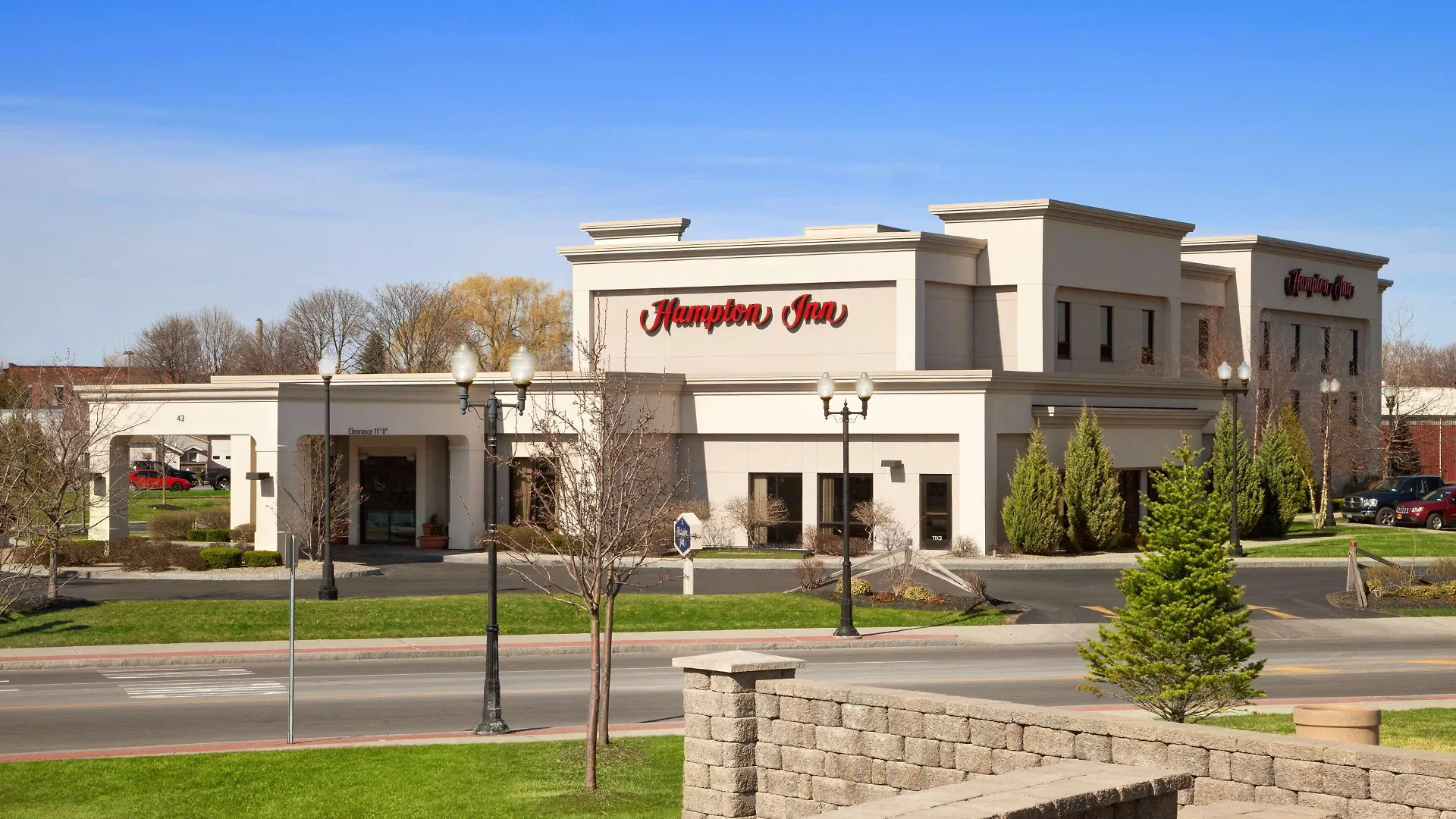
1. Hampton Inn Geneva
Show on map


 Check-infrom 15:00 until 23:59Check-outuntil 11:00
Rooms filling fast – secure the best rate!
fromUS$ 119
-
2. Best Western Clifton Park
Show on map


 Check-infrom 15:00 until 23:59Check-outuntil 11:00
Just a few rooms left at the best rate!
fromUS$ 125
-
3. The Alpine Lodge
Show on map


 Check-infrom 16:00 until 23:59Check-outuntil 11:00
Just a few rooms left at the best rate!
fromUS$ 119
-
4. Holiday Inn Express Hotel & Suites West Coxsackie By Ihg
Show on map


 Check-infrom 15:00 until 23:59Check-outuntil 11:00
Best price guarantee
fromUS$ 117
-
5. Ramada By Wyndham Rome - Verona
Show on map


 Check-infrom 15:00 until 23:59Check-outuntil 11:00
Hurry – almost gone at this price!
fromUS$ 106
-
6. Tru By Hilton Syracuse-Camillus
Show on map


 Check-infrom 15:00 until 23:59Check-outuntil 12:00
Best price guarantee
fromUS$ 410
-
7. Barrister'S Bed & Breakfast
Show on map


 Check-infrom 15:00 until 21:00Check-outfrom 10:00 until 11:00
Hurry – almost gone at this price!
fromUS$ 169
Best Premium Stays
These properties offer elevated positioning, stronger amenities, and more distinctive character - from boutique B&Bs in historic buildings to waterfront resorts on the St. Lawrence River.
-
8. Saratoga Arms Hotel
Show on map


 Check-infrom 15:00 until 22:00Check-outuntil 11:00
Hurry – almost gone at this price!
fromUS$ 409
-
2. 1000 Islands Harbor Hotel
Show on map


 Check-infrom 16:00 until 23:59Check-outuntil 11:00
Just a few rooms left at the best rate!
fromUS$ 120
-
10. Bonnie Castle Resort & Marina
Show on map


 Check-infrom 15:00 until 22:00Check-outfrom 06:00 until 11:00
Best price guarantee
fromUS$ 187
-
4. Buffalo Harmony House
Show on map


 Check-infrom 16:00 until 21:00Check-outfrom 08:00 until 11:00
Best price guarantee
fromUS$ 298
-
5. The Inn At Stone Mill
Show on map


 Check-infrom 15:00 until 19:00Check-outuntil 11:00
Best price guarantee
fromUS$ 135
-
6. The Hudson Whaler
Show on map


 Check-infrom 15:00 until 23:00Check-outuntil 11:00
Rooms filling fast – secure the best rate!
fromUS$ 173
-
7. Nautical Nest Hudson
Show on map


 Check-infrom 15:00 until 23:30Check-outuntil 11:00
Best price guarantee
fromUS$ 166
-
8. Hudson Mariner
Show on map


 Check-infrom 15:00 until 23:59Check-outuntil 11:00
Best price guarantee
fromUS$ 127
Smart Timing & Booking Advice for Upstate New York
Upstate New York's peak demand is heavily fragmented by sub-region. August is the single most expensive month across the Capital District and Saratoga Springs due to the thoroughbred racing season at Saratoga Racetrack - book Saratoga Arms and any Saratoga Springs property at least 8 weeks in advance for this window. The Hudson Valley peaks in October during fall foliage, when Hudson and West Coxsackie properties fill quickly on weekends. The Thousand Islands - including 1000 Islands Harbor Hotel and Bonnie Castle Resort - peak in July and early August, with shoulder-season rates in May and September offering savings of around 25% on waterfront properties.
For ski travelers targeting the North Creek and Gore Mountain area, midweek stays at The Alpine Lodge are substantially cheaper than Friday-Sunday. The Finger Lakes corridor (Hampton Inn Geneva, Barrister's B&B) sees its busiest period from June through September for wine trail touring, with harvest weekends in September particularly in demand. Three to four nights is the practical minimum for any Upstate New York itinerary to justify the driving distances involved - single-night stays rarely provide enough time to explore a sub-region meaningfully. Last-minute deals outside peak windows exist but are unreliable given the limited inventory at character-driven B&B properties.